Time & Workforce Management
Master productivity and well-being by optimising time, scheduling and flexibility. Discover how European companies are rethinking workforce management — leveraging data, automation and smart planning tools to balance efficiency with employee happiness.
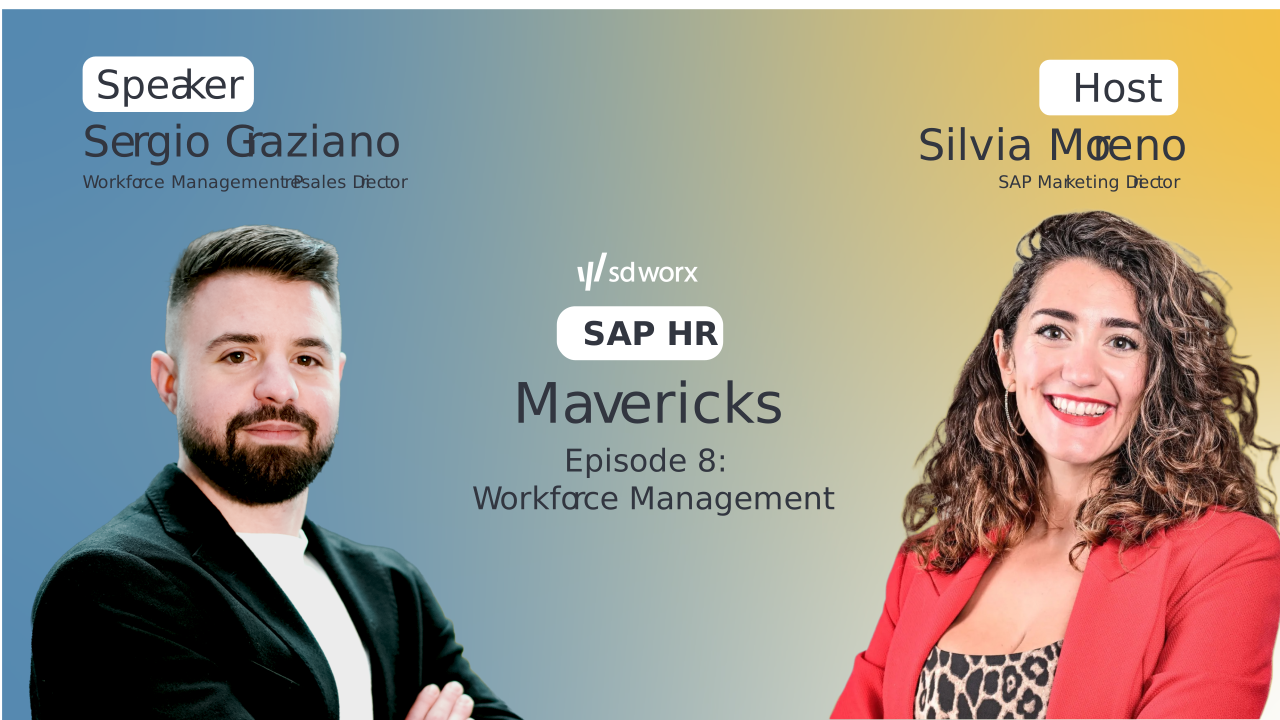
SAP HR Mavericks Podcast | Episode 8: Workforce Management
In this episode of the SAP HR Mavericks podcast, our host Silvia Moreno Rodriguez, SAP Marketing Director, is joined by Sergio Graziano, Pre-Sales Lead for Workforce Management at SD Worx, to talk about how workforce management has moved from a back-office task to a boardroom priority.
In this episode, we cover:
- Why workforce management is no longer just time and attendance: Clocking in and out used to be the whole story. Now scheduling, payroll integration and employee experience all sit under one system, and Business Leaders are starting to see the impact this has on payslip accuracy and staff retention.
- How skills are replacing job titles in scheduling: Companies are moving away from filling fixed roles and toward matching tasks to the people best suited for them. This shift also takes employee preferences and availability into account, which is changing how schedules get built.
- Where AI is actually making a difference today: AI is automating scheduling decisions and starting to let non-technical users write policies and rules in plain language. On the compliance and configuration side, AI still has a way to go and remains an area for the future.
- What happens when humans and AI agents share a schedule: Sergio shares his view on how planning will eventually include both people and AI agents working side by side, and why organisations need to start thinking now about how that division of labour will work.
- Why compliance is the biggest hidden cost: With regulations changing by country and by year, especially across Europe, non-compliance is not just a fine. It is wasted time, wasted budget and, in some cases, a legal risk.
Tune in to hear Sergio's take on what HR Leaders should be focusing on right now, and get a glimpse of what workforce management could look like by 2030.

Re-Humanising Organisations: The Core of Industry 4.0 Resilience
Henrik von Scheel is recognised as one of the most influential futurists of the century and is credited with originating Industry 4.0. His work has impacted 24 nations and 23% of Fortune 500 companies. This article is an excerpt from his recent webinar, “Resilient Workforce Strategies in the Era of Industry 4.0”.
* * *
As someone who helped ignite the Fourth Industrial Revolution, I'm often asked to explain not just what Industry 4.0 is, but why it matters for the future of work and manufacturing. Today, I want to share with you the human dimension of this transformation—the aspect that many overlook when focusing solely on technology.

The Future of Manufacturing: Where Industry 4.0 Meets Workforce Management
In today's rapidly evolving manufacturing landscape, one thing is clear: companies that fail to embrace digital transformation risk being left behind. As factories become smarter and more connected, the question isn't whether to digitalise—it's how quickly you can adapt your workforce strategy to keep pace with technological change.

How do I get employees on board with time tracking?
Time tracking solutions are powerful tools for improving productivity and promoting work-life balance. In fact, 43% of employees say time tracking solutions give them insight into when they work too much, and 53% see it as crucial for organising and planning their work. However, it’s not without its challenges - 28% of employees report that time tracking causes stress.

How can time tracking support employee well-being?
Time tracking solutions have traditionally been viewed as tools that benefit employers by ensuring efficiency and compliance. However, as work-life balance becomes a growing priority, it’s clear that time tracking solutions also hold significant potential for supporting employee well-being.

How do I choose the right Time & Attendance software?
Choosing the right Time & Attendance software is a critical decision that impacts not just workforce management, but also compliance, integration, and employee satisfaction. With 28% of companies prioritising solutions that align with changing legislation, 26% focusing on security and access control, and 25% valuing seamless integration with other systems such as payroll, it’s clear that functionality is key. Additionally, modern workforce management solutions must address growing complexities like data security, legal compliance, and self-service capabilities for employees.

What are the benefits of using Time & Attendance software?
Time & Attendance software can be a real strategic asset for businesses aiming to optimise workforce operations and scale efficiently. With over 70% of companies with more than 2,500 employees adopting personnel planning systems, larger organisations clearly recognise the value of smart scheduling solutions. However, adoption rates drop to 52% among smaller businesses, underscoring the opportunity for growth.

Where should I invest to enhance my Time & Attendance strategy?
Optimising time registration and staff scheduling is a key challenge for employers, with 34% identifying time utilisation and output as their top priority. However, the second biggest concern (chosen by 33%) is improving employee confidence and reducing the perception that time tracking systems are overly controlling.

How can time management support our organisational goals?
Time management isn’t just about tracking hours - it’s a strategic tool that can drive workforce productivity, compliance, and employee well-being. According to our research, 75% of employees are required to record their working hours, and for good reason - employers using time tracking and scheduling systems report an average time saving of 30%, streamlining processes and supporting both business and workforce needs.

How do I ensure flexible working options meet employee expectations?
While offering flexible working options is a step in the right direction, organisations often fall short of aligning flexible policies with employee expectations. Our research highlights a significant gap: while 62% of employees prefer a flexible daily schedule, only 43% currently have access to one. Similarly, 60% of employees value flexible work rosters, yet only 43% are able to benefit from them.

Where do I start with building a flexibility-first culture?
Flexibility is no longer just a perk - it’s an expectation. Across Europe, our research reveals that flexible working hours and extra days off rank as the second and third most-preferred employee benefits, following salary as the top priority. However, only 50% of employees report being satisfied with their current work-life balance.
Time Navigator eBook
Discover actionable strategies for balancing employee wellbeing, compliance, and workforce productivity in our comprehensive Time Navigator eBook.